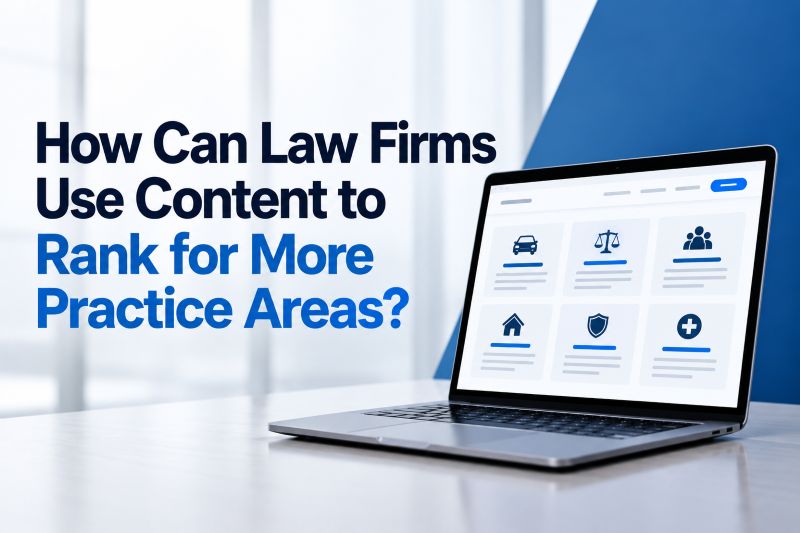
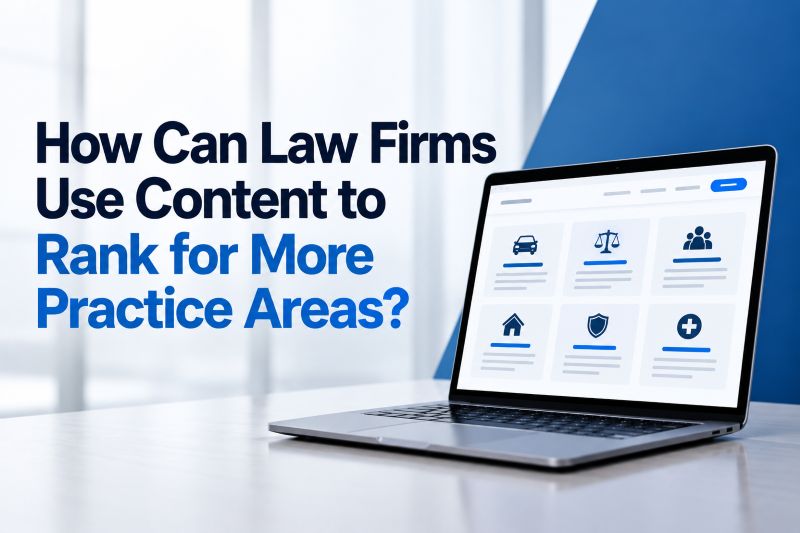
A law firm may offer excellent representation across several practice areas but struggle to appear in Google search results for anything beyond its primary service. For example, a personal injury firm might rank well for car accident searches while receiving little organic traffic for truck accidents, motorcycle accidents, or wrongful death cases.
In many situations, the problem is not a lack of legal experience. It is a lack of website content that clearly communicates the firm's services to both potential clients and search engines.
High-quality content helps law firms establish relevance for different legal topics, answer prospective clients' questions, and build a stronger presence in organic search results. However, simply publishing more pages is not enough. Each page needs a clear purpose, useful information, and a place within the website's overall SEO strategy.
Why Do Law Firms Struggle to Rank for Multiple Practice Areas?
Google evaluates individual pages to determine which results are relevant to a particular search.
A law firm that mentions truck accidents in a paragraph on its homepage may have difficulty competing against firms with comprehensive, dedicated truck accident pages.
The same applies to estate planning, criminal defense, family law, and virtually every other legal practice area.
Common content-related problems include:
- Combining several unrelated services onto one generic page.
- Publishing practice area pages with very little useful information.
- Using nearly identical content across different services.
- Failing to answer questions potential clients frequently ask.
- Neglecting internal links between related pages.
- Creating new pages without considering existing website content.
These issues make it harder for search engines to understand which legal services the firm provides and which pages should appear for specific searches.
A structured content strategy helps address these weaknesses.
Create Dedicated Pages for Each Major Practice Area
One of the most effective ways to expand a law firm's organic visibility is to create individual pages for its primary services.
For example, a personal injury firm may benefit from separate pages covering:
- Car accidents.
- Truck accidents.
- Motorcycle accidents.
- Pedestrian accidents.
- Slip-and-fall accidents.
- Wrongful death.
- Catastrophic injuries.
Each page should explain the specific legal issue, relevant laws, potential client concerns, and how the firm assists individuals facing that situation.
A truck accident page, for instance, should address issues that distinguish commercial vehicle collisions from ordinary passenger vehicle accidents.
These might include federal trucking regulations, driver qualifications, maintenance records, and potentially responsible parties.
By developing meaningful information about each service, the firm creates a stronger foundation for ranking across multiple practice areas.
Use Supporting Blog Posts to Build Topical Relevance
Dedicated practice area pages establish the firm's core services, but supporting blog posts can help address more specific questions.
Consider a family law firm with a primary child custody page.
That page may target a competitive search such as "Denver child custody lawyer." Supporting articles could address questions such as:
- Can a child choose which parent to live with in Colorado?
- How does a judge determine child custody?
- Can a custody agreement be modified?
- What happens when a parent violates a custody order?
These articles serve a different purpose from the main practice area page.
Rather than competing for exactly the same search, they address narrower questions and create opportunities to connect readers with the firm's broader legal services.
A strong blog strategy is not simply about publishing regularly. It is about identifying relevant questions and providing answers that complement the firm's existing pages.
Organize Content Into Related Topic Groups
Law firms often publish pages individually without considering how those pages fit together.
A more organized approach groups related content around major practice areas.
For example, a criminal defense website might organize its content around DUI defense, drug crimes, domestic violence, and other criminal charges.
Each primary service page can connect to supporting articles that address related legal questions.
This structure offers several advantages:
- Visitors can find more information about their specific legal concerns.
- Search engines can better understand relationships between pages.
- Supporting articles can direct potential clients toward relevant services.
- The firm can identify gaps in its existing content.
Internal linking is particularly important. A blog post explaining the penalties for a second DUI should naturally link to the firm's DUI defense page.
The goal is to create a website where related information is easy to find, rather than a collection of disconnected articles.
Target Search Intent Instead of Repeating Keywords
Ranking for additional practice areas requires more than placing a service keyword throughout a page.
A person searching for "what happens after a DUI arrest" is looking for different information than someone searching for a "DUI attorney near me."
The first search is primarily informational. The second suggests the person may be ready to contact an attorney.
A complete content strategy should address both types of searches.
Practice area pages generally focus on explaining legal services and encouraging prospective clients to seek representation.
Blog posts can answer specific questions, explain legal procedures, and introduce readers to the firm's experience with relevant cases.
Using natural keyword variations helps make content comprehensive without forcing the same phrase into every paragraph.
Expand Into Geographic Searches Carefully
Law firms serving multiple cities may also benefit from location-specific content.
For example, a Denver law firm serving Aurora, Lakewood, and Littleton might create pages addressing its services in those communities.
However, publishing nearly identical pages with only the city names changed is unlikely to provide meaningful value.
Useful geographic pages should reflect genuine differences in the audience or location, including relevant courts, local considerations, and the firm's actual service area.
A law firm should prioritize helpful, accurate information over producing dozens of repetitive location pages.
Update Existing Content Before Creating More Pages
Sometimes the best opportunity to improve rankings is already on the website.
Older practice area pages may contain outdated information, incomplete explanations, or content that no longer reflects the firm's services.
Before commissioning additional pages, law firms should review their existing content.
Questions worth asking include:
- Does each major practice area have a dedicated page?
- Is the information accurate and current?
- Does the page address common client questions?
- Are related articles linked appropriately?
- Does the page clearly explain how the firm can help?
- Are multiple pages competing for the same search intent?
Updating an existing page can sometimes be more effective than creating a new one that covers substantially the same subject.
Why Content Quality Matters More Than Publishing Volume
Publishing large quantities of generic content does not guarantee better rankings.
Legal content needs to be especially accurate because readers may rely on it when making important decisions about their rights, finances, or families.
Strong legal content should demonstrate a clear understanding of the subject, accurately explain applicable laws, and provide information relevant to the intended audience.
It should also be written for prospective clients rather than exclusively for search engines.
At Epic Web Results, our legal content marketing services focus on developing useful, search-focused website content that supports law firms' broader marketing goals.
The objective is not simply to add more words to a website. It is to create content that strengthens relevant search visibility and helps potential clients understand why they should consider contacting the firm.
How Can Law Firms Measure Content Marketing Results?
Search rankings are one useful indicator, but they should not be the only measure of success.
Law firms should also evaluate organic traffic, engagement, inquiries, and whether visitors are finding the services they need.
Google Search Console can help identify which queries and pages generate search impressions and clicks.
Analytics and conversion tracking can provide additional insight into whether content contributes to contact form submissions, phone calls, and other meaningful actions.
These measurements help firms determine which practice areas need additional content and which existing pages deserve improvement.
Build a Stronger Legal Website With Epic Web Results
Expanding a law firm's visibility across multiple practice areas requires a thoughtful content strategy. Dedicated service pages, relevant blog posts, internal linking, and regular content improvements can help establish a stronger organic search presence.
At Epic Web Results, we help law firms in Denver and nationwide develop professional website content designed to support SEO, communicate their services, and attract prospective clients.
If your firm wants to improve its visibility across more practice areas, contact Epic Web Results to discuss your legal content marketing strategy.