
Your law firm’s website is often the first meaningful interaction a potential client has with your practice. Before someone calls your office or schedules a consultation, they may already be forming an impression based on your website’s design, content, usability, and professionalism.
A strong attorney website should do more than look good. It should reflect your firm’s brand, establish trust, make important information easy to find, and guide potential clients toward taking the next step. When thoughtful design, optimized content, and intuitive navigation work together, your website becomes an active part of your law firm’s marketing strategy.
Watch our short video below to see why your law firm’s website should be more than a digital business card.
Watch: Your Law Firm’s Website Is More Than a Digital Business Card
Your law firm’s website is often the first meaningful interaction a potential client has with your practice. Before someone calls your office, schedules a consultation, or meets an attorney, they may spend several minutes deciding whether your website gives them a reason to take that next step.
That is why effective law firm website design involves much more than creating an attractive digital business card. Your website needs to establish trust, communicate your brand, help potential clients find relevant information, support search visibility, and make contacting your firm simple.
At Epic Attorney Marketing, we build attorney websites with those goals in mind.
Your Website Creates an Important First Impression
Potential clients frequently research several attorneys before deciding whom to contact. During that process, your website can shape how they perceive your firm.
An outdated, confusing, or difficult-to-use site can create the wrong impression, even when the attorneys behind it provide excellent legal representation. A polished website, on the other hand, can immediately communicate professionalism and credibility.
Strong law firm website design should give visitors a clear understanding of who you are and what you do without forcing them to search for basic information.
That starts with fundamentals such as:
- Clean, professional visual design
- Clear practice area information
- Straightforward navigation
- Readable content and typography
- Mobile-friendly functionality
- Prominent contact information
- Consistent firm branding
Every element should contribute to the same objective: helping a prospective client feel confident continuing to explore your firm.
A Law Firm Website Should Help Build Trust
Hiring an attorney can be a significant decision. Depending on the practice area, a potential client may be facing an injury, criminal accusation, immigration matter, business problem, family concern, or another issue with serious consequences.
That person is looking for more than a list of legal services. They want to know whether your firm understands their situation and whether they can trust you to help.
A strong website begins establishing that trust before a conversation ever occurs.
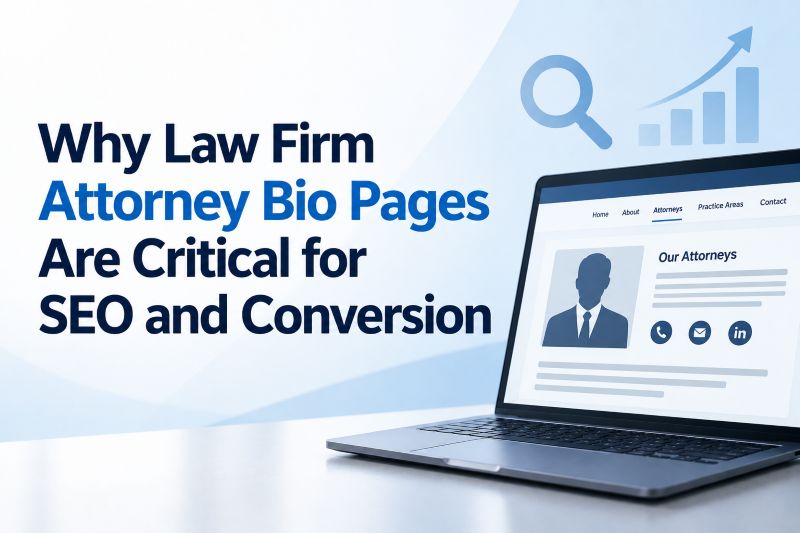
Attorney biographies, meaningful practice area pages, clear explanations of legal issues, firm credentials, testimonials where permitted, and informative resources can all help prospective clients learn more about the people behind the practice.
The key is presenting this information clearly. A visitor should not have to work to understand what your firm handles, whom you represent, or how to get in touch.
Easy Navigation Helps Visitors Find the Information They Need
A visually impressive law firm website can still fail if visitors cannot use it effectively.
Someone arriving through Google may enter the site through a blog article or specific practice area page rather than the homepage. The site should make sense regardless of where that visitor begins.
Good navigation provides clear paths to important information, including:
- Practice areas
- Attorney profiles
- Office and location information
- Frequently asked questions
- Legal resources
- Contact options
Consider a potential client looking for a personal injury attorney after an accident. That person should be able to quickly identify whether the firm handles the type of claim involved, learn about the firm, and find a clear way to request help.
Removing unnecessary friction makes it easier for visitors to take action.
Visually Strong Design Should Reflect Your Law Firm’s Brand
There is no single design that works for every law firm.
A corporate law practice may want to communicate a different image than a criminal defense or personal injury firm. The colors, typography, photography, messaging, and overall presentation should feel appropriate for the attorneys, clientele, and legal services represented.
Consistency is particularly important. When branding changes dramatically from one page to another, a website can feel disconnected or unfinished.
A cohesive design creates a recognizable identity throughout the site while supporting the firm's larger marketing strategy.
That does not mean filling every page with elaborate graphics or visual effects. In many cases, restraint produces a stronger result. Clean layouts, intentional use of space, professional imagery, and clear calls to action can communicate more effectively than a site overloaded with competing elements.
Optimized Content Supports Search Visibility
A well-designed website also needs content that helps potential clients find it.
Search engines need to understand the subjects, services, and geographic markets associated with a law firm. Potential clients, meanwhile, need useful information that addresses the questions behind their searches.
Those goals should work together.
Our legal content development services focus on creating useful website content while supporting the firm's broader search strategy. Instead of stuffing pages with repetitive keywords, content should naturally explain the firm's services and address topics relevant to prospective clients.
An effective attorney website may include optimized content across:
- Core practice area pages
- Supporting service pages
- Attorney biographies
- Geographic or location pages
- Frequently asked questions
- Educational blog posts and resources
The result is a website that provides search engines with relevant information while giving human visitors substantive reasons to stay, read, and engage with the firm.
Website Design and SEO Should Work Together
Website design and search engine optimization should not be treated as completely separate projects.
Technical performance, mobile usability, site organization, internal linking, content, and user experience can all affect how successfully a law firm's website performs online.
For example, a firm may publish excellent legal content, but that investment becomes less valuable if pages load slowly or the site is frustrating to use on a phone. Likewise, a beautiful website may struggle to attract organic traffic if its structure and content do not support search visibility.
Our law firm SEO services address the search side of that equation. When SEO, content, and website development support one another, a law firm can build a stronger foundation for long-term online visibility.
Make It Simple for Potential Clients to Take the Next Step
Every law firm website ultimately needs to help interested visitors move from research to action.
That does not mean overwhelming every page with aggressive calls to action. It means ensuring that when someone decides they are ready to speak with an attorney, there is no confusion about what to do next.
Phone numbers and contact options should be easy to locate. Forms should be straightforward. Mobile users should not need to pinch, zoom, or search through complicated menus just to contact the office.
Calls to action should also appear at logical points throughout the website. A prospective client who reaches the end of a practice area page, for example, should have a clear opportunity to contact the firm rather than reaching a dead end.
These details may seem small, but together they determine whether a website merely provides information or actively supports the firm's business development goals.
Your Law Firm’s Website Should Work Hard for Your Firm
A great attorney website should look professional, but appearance is only part of the job. It should reflect your brand, establish trust, guide visitors to useful information, support your visibility in search results, and make contacting your firm easy.
In a competitive legal market, your website should be an active part of your marketing strategy, not simply an online brochure.
If your law firm is dealing with an outdated or underperforming website, our team is here to help. Call us today or connect with us online to schedule a consultation.