
, , , ,

ATTN Attorneys: Cybersquatting and What You Can Do to Stop It (Part 2)

September 6, 2013
By epic
Continuing from Cybersquatting and What You Can Do to Stop It (Part 1), the following provides some additional information regarding the practice of cybersquatting. While Part 1 of this blog focused on defining what cybersquatting is and how you can recognize it, here in Part 2, we will concentrate on discussing what you can do […]
ATTN Attorneys: Cybersquatting and What You Can Do to Stop It (Part 2)
The Anticybersquatting Consumer Protection Act and ICANN have provisions that can help trademark owners combat cybersquatting and obtain the URL related to their trademark.

Continuing from Cybersquatting and What You Can Do to Stop It (Part 1), the following provides some additional information regarding the practice of cybersquatting. While Part 1 of this blog focused on defining what cybersquatting is and how you can recognize it, here in Part 2, we will concentrate on discussing what you can do to combat cybersquatting.

Although cybersquatting is not necessarily an illegal practice, it is unethical, and there are two ways that you can go about combatting it and obtaining the URL associated with the trademark that you own. These methods involve:

  • Suing the cybersquatter by use of the Anticybersquatting Consumer Protection Act (ACPA): According to the ACPA, the owner of a trademark can sue a cybersquatter in federal court to try to obtain the domain name related to that trademark. To win such a lawsuit, the plaintiff (i.e., owner of the trademark) must prove that:
    • The cybersquatter has intentionally acted in bad faith in trying to profit off of the trademark.
    • The trademark had a unique distinction when the URL was initially registered.
    • The URL is the same as or remarkably similar to the trademark.
    • The trademark is protected by U.S. federal laws.
  • Using ICANN’s international arbitration system: In this method of combatting cybersquatting, the trademark owner can initiate arbitration against the cybersquatter if:
    • The URL is the same as the trademark name or remarkably similar to it.
    • The cybersquatter has no legitimate interests in the URL, aside from profiting off of the trademark.
    • The URL has been registered, and it can be proven that it is being used in bad faith.
From the Blog

Latest Insights forLaw Firm Growth.

View All Articles →
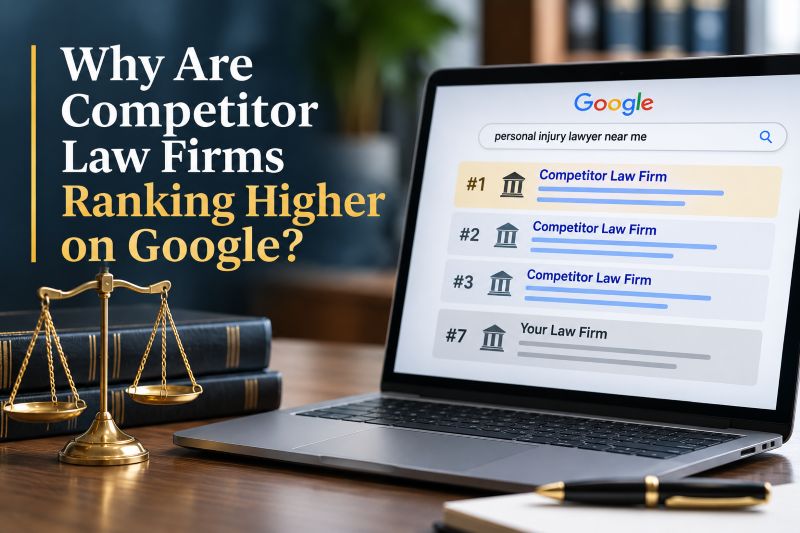
Why Are Competitor Law Firms Ranking Higher on Google?
November 17, 2026

Why Are Competitor Law Firms Ranking Higher on Google?

When potential clients search Google for an attorney, the firms appearing near the top of the results often receive the most attention. If competing law firms consistently outrank your website, you could be missing opportunities to connect with people actively searching for the legal services you provide. However, ranking higher on Google is not necessarily […]
Read Article →
How Can Law Firms Optimize Their Websites for Google AI Overviews?
November 10, 2026

How Can Law Firms Optimize Their Websites for Google AI Overviews?

Google search is changing how potential clients find attorneys online. In addition to traditional organic search results, Google now displays AI Overviews for certain searches, providing AI-generated summaries that answer users' questions and link to relevant websites. For law firms, this creates another opportunity to reach potential clients who are researching legal questions, comparing attorneys, […]
Read Article →
20 Ways We Help Law Firms Improve AI Visibility
November 3, 2026

20 Ways We Help Law Firms Improve AI Visibility

Artificial intelligence is changing how people search for legal information and find attorneys. Instead of relying exclusively on traditional Google search results, prospective clients are increasingly using tools like ChatGPT, Google AI Overviews, and other AI-powered platforms to research legal questions, compare law firms, and explore their options for legal representation. For law firms, this […]
Read Article →
How Can Law Firms Use Content to Rank for More Practice Areas?
October 21, 2026

How Can Law Firms Use Content to Rank for More Practice Areas?

A law firm may offer excellent representation across several practice areas but struggle to appear in Google search results for anything beyond its primary service. For example, a personal injury firm might rank well for car accident searches while receiving little organic traffic for truck accidents, motorcycle accidents, or wrongful death cases. In many situations, […]
Read Article →
1 2 3 … 132

What Law Firms Are Saying

What Our Clients Say

Our Clients. Real Results.

Ready to Grow Your Firm's Rankings and Visibility?

Let's create a focused strategy that drives qualified traffic, case inquiries, and measurable growth for your practice.
linkedin facebook pinterest youtube rss twitter instagram facebook-blank rss-blank linkedin-blank pinterest youtube twitter instagram