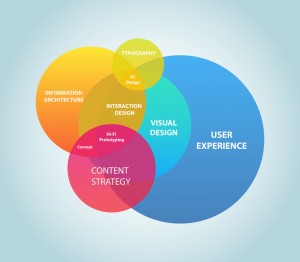
Making your site as user friendly as possible can be the key to success with both potential new clients and search engines. In fact, one of Google’s main guiding principle is to “focus on the user.”
That being said, however, knowing the specific elements that make a site more or less user friendly may not be as obvious or clear for some, particularly those who are designing their first business website or who have not redesigned their site in some time. Shedding some light on this, below, we will reveal some of the more common features of user friendly websites.
What User Friendly Sites Have in Common
1 – Clear, logical navigation

The easier that it is for users to navigate a website, the better their experience will usually be. This is because a logical navigation, which should provide a clear overview of what the site has to offer, can allow users to easily get to where they want or need to be on your website.
This, in turn, can help them glean the information they are looking for ASAP, increasing the chances that they will respond to a site’s call to action.
Helpful tip: Figure out a hierarchy for the information on your site, and organize the information according to topic. If possible, use this as a plan to drive your content creation efforts.
2 – Well-formatted and well-written content
Once users get to the page of content on your site that they are looking for, they will typically scan that page for a specific piece of information, rather than reading the entire page. So, make it easy for users to scan a page via thoughtful formatting. This can include using:
- Bulleted lists
- Bolded text to highlight key topics/phrases
- Sufficient headings and subheadings to clearly define different topics on the page.
Similarly, make sure that your well-formatted content is also well-written. If your content is cluttered with typos and grammar mistakes or it just offers generic or useless information, you are most likely going to lose credibility with users (and, in turn, not get them to respond to your call-to-action or to return to your site in the future).
Helpful tip: Make sure your content is properly optimized before it’s published so that it is as appealing as possible to both users and search engines.
3 – Fast loading times
Longer loading times – even if it’s just by seconds – will usually be an immediate turn-off to users. People don’t want to wait for your site to load, so don’t make them.
Helpful tip: Make sure your site loads within less than 4 to 6 seconds. Anything longer than that will typically negatively affect the user experience and search engine rankings.
4 – Functional buttons and forms
While buttons on your site can aid navigation, the forms will most likely be part of your call-to-action – places where users can contact you and further engage with your business.
If either of these features do not work (because, for instance, they send people to error pages or the forms are too complicated/unclear), people are probably not going to use these features again after trying them once; worse yet, they may never return to your site again.
Helpful tip: Test out all buttons and forms on a site before it goes live or after any changes are made to these features. This can help identify potential bugs before they impact the user experience.
5 – Optimized for mobile
Mobile optimization and compatibility is essential for any business website these days because more and more people are only relying on mobile devices to access the Internet. This means that, if your site isn’t mobile friendly, it’s also probably not user friendly to a significant portion of your potential clients.
Helpful tip: Responsive design can be the way to go to ensure that your site appropriately displays across a range of mobile devices and platforms.
Contact Epic Web Results for Effective Internet Marketing Solutions
When you are ready to design (or redesign) a website that will perform well with users and search engines – and that will get you the best results, contact Epic Web Results. Call us at (800) 501-9724 or email us using the contact form on this page to learn more about our customized, cost-effective, and innovative Internet marketing solutions.